Showing posts with label Pre-AP. Show all posts

Friday, May 26, 2017

Pre-AP: Essay Feedback

We discussed this in class today:

Problem Patterns:
  • Spell out symbols such as &
  • Scarce text evidence.
  • Evidence not properly cited.
  • Text evidence not embedded.
  • No connection to theme. Prompt asked for “…how journey adds to the meaning of the work as a whole” and while most of you proved he went on a journey and proved it impacted him or others, you never came back to how those small details “add to the meaning of the work as a whole,” which means you didn’t connect the small details to the big picture (theme).
Things to remember:

GOAL 1: Properly cite all text evidence.
Source: Purdue OWL
The author's name may appear either in the sentence itself or in parentheses following the quotation or paraphrase, but the page number(s) should always appear in the parentheses, not in the text of your sentence. For example:
Wordsworth stated that Romantic poetry was marked by a "spontaneous overflow of powerful feelings" (263).
 
Romantic poetry is characterized by the "spontaneous overflow of powerful feelings" (Wordsworth 263).

Wordsworth extensively explored the role of emotion in the creative process (263).

GOAL 2: Treating text evidence with respect.
  • Text evidence should never be taken in complete sentences. (Perhaps unless you are discussing the syntax or dialect in which a character speaks.)
  • Grab only the phrases you need and weave it into your writing. The goal is to analyzing and quoting in the same sentence at the same time. (This is kind of advanced, so if you’re struggling, continue the method we did with SAR’s: Topic Sentence, Chunk of text evidence and explanation, and then analysis. This is called “chunking” and it’s a good way to get started if written analysis not a strength for you.)
  • Good paragraphs should have multiple pieces of text evidence. For everything you say about the piece, SHOW US with a quote, don’t TELL US what the piece said. (So for you people writing in “chunks,” that means every paragraph should have at least two chunks.)
  • If you are proving a change, you have to prove the before AND the after. If you are proving something about two different characters, you must have a quote from both characters, etc.
  • Do not begin or end a paragraph with text evidence.

GOAL 3: Focus and coherence.
  • Your thesis should always contain big ideas, and your paragraphs hold the small details. Take care to tie these two together. Refer back to your thesis constantly; use key words from your thesis (or synonyms, if the key words become repetitive). If you can’t explain how a piece of evidence goes with what you are trying to prove, then it’s not a good piece of evidence. If you can explain how it goes, then keep it.
  • Interesting, unique “acrobatic” connections are what AP teachers dream of. If you have an original thought, go with it. Feel free to deviate from the common train of thought. As long as your ideas are logical and supported with evidence, you’re good to go. Misreading the text or manufacturing a meaning that is not there will get you nothing.


Friday, April 28, 2017

Pre-AP: Book Clubs

We will begin Book Clubs on Monday, May 1. You must read the first third of your book by this date. The book options are listed in the slide show below.

The Book Club work due on May 1 is Posted Here

Monday, April 3, 2017

Pre-AP: Survival Project 2017

Documents:

Survival Project Assignment Page

Survival Project Intro PowerPoint w/ Works Cited Info (Shown in class 4/3/2017)

Research Tips and Works Cited / Database Info

I want to emphasize that we are grading the content of your presentation, not your presentation skills. Whatever mode of presentation you choose, please make sure it is adequate for all the information you have to present to us. If you find it difficult to add a Works Cited to your presentation, you may hand that to me separately (must be typed).

The project will be presented on Monday, April 10. How can I present my research?

Paper-Based Options:
Poster (glitter is optional, but recommended)
Brochure (make enough to pass out to the class)
Write a Journal

Technology-Based Options:
Microsoft PowerPoint
Google Slides - drive.google.com and sign in with any Gmail account
Microsoft Photo Story
Make a film – iMovie, Windows Movie Maker, or the video editing software on your phone

Other Options:
Do a Live Skit

Citing Webpages and Documents from the Web
You need these pieces of information:

  • Author of article (if available)
  • Title of the website
  • Title of Article/Page
  • Name of company/publisher/who pays for the site and its info?
  • Date you accessed it (today's date)
  • Date it was published to the web (if available)
  • URL (copy/paste) at the end of the citation

Need help doing MLA citations? Try bibme.org -  click MLA and then choose Manual Entry Mode. Put in all the info, and click Create Citation! Copy/paste into your Word Doc or project.
 

Wednesday, March 29, 2017

Pre-AP: Assignment for Thursday 3/30/17 (2nd Period)

Hello, everyone. Today, I am proctoring the English II EOC exam.

Here is the powerpoint that explains the assignment:

(3rd period will do this assignment, too.)

Wednesday, March 22, 2017

Pre-AP: Expository Writing - Idea Generation for EOC Essays

This is the handout for block day this week. We discussed using a literary example on your EOC essay.

Expository Essay Practice (Formative)

Due end of block day 3/22-3/23.

Tuesday, February 21, 2017

Pre-AP: Our Town Review

Terms to review:

Essential questions:
According to this dramatist:
·         What things are ephemeral (lasting only a short while) and what things should be remembered forever?

Motifs (repeated symbols or ideas):
  • Annotate the rest of the song to reflect the happenings in Act III. How does this song reflect the plot of the play? How does this song reflect its themes?
  • What is the importance of the song “Blessed Be the Tie that Binds?”
  • What natural cycles appear in this play? Explain the importance of these natural cycles. Birth/death, seasons/weather
  • How is time used in this play? Who talks about it?

Theme:
  • What makes this play universal? How does it apply to everyone?
  • What universal messages does this play deliver? Be able to support this with quotations.
  • Be ready to discuss and provide support for these themes:

o   The beauty in everyday objects and events
o   Humans should not go through life alone

Skills:
  • Infer details about characterization from stage directions
  • Infer details about characterization from dialogue
  • Support an assertion with text evidence


Tuesday, January 31, 2017

Pre-AP: Expository Writing

Here are the slides from class today: Click here for the PDF

Teacher-student writing conferences on Block Day this week! Be prepared. Rewrite at least 1 body paragraph of your "Definition of Friendship" essay.

Here is a clean copy of the model essays (Score 3 and 4) we looked at today: Click here

Here is the annotated 3:

Monday, January 16, 2017

Thursday, January 5, 2017

Pre-AP: Romeo & Juliet Full Text

Here is the full text of the play: The Tragedy of Romeo and Juliet

In case you need an extra copy of the R + J packet: Shakespeare Packet (Notes by Act)

Click here for No Fear Shakespeare Website

SAR for Act 1. Due Monday, January 9, 2017. 


Thursday, October 20, 2016

Pre-AP: Homework Help: Compound and Complex Sentences

On the board 9/23 and 9/24.
Some examples:

COMPOUND SENTENCES: FANBOYS

I am hungry, so I decided to eat a burrito.

My doctor says that I'm doing a good job losing weight, yet I still write all my grammar examples about junk food. 

Notice that the yellow parts each function as complete sentences (aka independent clauses). They have a subject + verb. The pink parts are coordinating conjunctions. Compound sentences join two independent clauses with a coordinating conjunction. Read that sentence to yourself four more times. 

COMPLEX SENTENCES: AWUBIS

There are two different ways you can write a complex sentence, as you can see in the picture of the notes above. Complex sentences join 1 dependent and 1 independent clause with a subordinating conjunction. Repeat that sentence a few more times, too.

Because I plan to eat a large plate of Mexican food on Friday after work, I will probably not lose too much weight this week. 

Notice that the yellow parts express a complete thought, and if they were taken out of the context of this sentence, they would both be a complete sentence. "I plan to eat a large plate of Mexican food on Friday after work" is made to be a dependent clause by the presence of the subordinating conjunction immediately before it. "I will probably not lose too much weight this week" is an independent clause. Notice that because the dependent clause comes first in this example, the comma is needed. 

You can also put the dependent clause after the independent clause, like this:

I will probably feel guilty about eating Mexican food unless I make up for it by exercising a little bit extra this weekend. 

Again, both yellow segments of this sentence have a subject and a verb, and if taken out of the context of this sentence, they both would be complete sentences. Because we add the subordinating clause to the front of "I make up for it...," it becomes a dependent clause. 


A More Complete List of Subordinating Conjunctions
(AWUBIS)


Monday, October 17, 2016

Pre-AP: Odyssey Exam tomorrow

To review:

  • Look over the introductory notes for the Odyssey.
  • Review the attributes of a hero and epic journey. Affirm that you know all the terms that are on the notes, such as hubris and nonlinear plot structure.
  • List the main characters and all the challenges Odysseus faced. Can you name the main idea of each episode, and can you put these episodes in order?
  • Go back and reread any sections that you may have skimmed, skipped, or misunderstood.

The exam is all multiple-choice.

Wednesday, October 5, 2016

Pre-AP: Mythology Word Cloud

This word cloud represents our background knowledge in Greek mythology. Do you recognize all of these? Which gods, topics, or ideas do you think will play a heavy hand in The Odyssey?


Pre-AP: Mythology Word Cloud

This word cloud represents our background knowledge in Greek mythology. Do you recognize all of these? Which gods, topics, or ideas do you think will play a heavy hand in The Odyssey?


Thursday, September 22, 2016

Pre-AP: Vocabulary Notes to Study!

Here are some notes to help you study:


Tuesday, September 13, 2016

All: Picture Day!

PICTURE DAY for all of my classes will be Monday, September 26, 2016.

I will give you a few minutes in class to "freshen up" before we go, but please come to class ready!

Friday, September 9, 2016

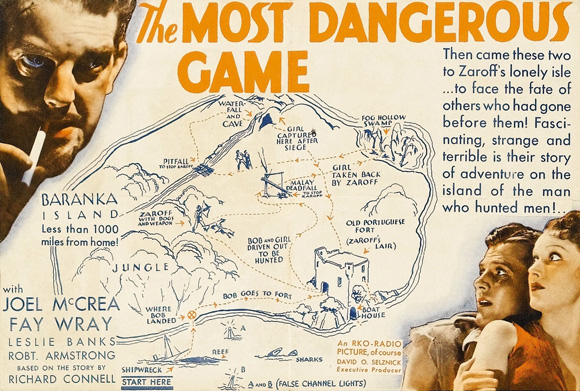
Pre-AP: "The Most Dangerous Game" PDF

Read this before class on Monday: The Most Dangerous Game
It's a PDF, so you should be able to open it even if you don't have Microsoft Word on your computer or phone.

There will be a plot-based reading check (formative grade) on Monday. This story is in our textbook, so you do not need to print it out or buy it. However, if you would like a copy of your own to annotate, you are welcome to print and bring a copy of your own. I have a class set of textbooks, too.


Thursday, September 8, 2016

Pre-AP: Grammar Review

Don't panic about grammar.

True story: When I was in high school doing English Pre-AP and AP, they never taught us grammar. It was a scary time in English-Teacher-History when they thought that just by reading and writing a lot, we'd have good grammar. This is partially true; I had good grammar, but I had no idea what anything was called. I just knew what "sounded right" - which I'm sure is what a lot of you rely on, too.

I had to learn all my grammar from my German classes, and let me tell you, German teachers are not known for understanding and careful remediation.

Be calm. Let me clarify:

An independent clause just has to have two things. A subject and a verb.

For example:
  • He goes.
  • You write.
  • She smells.
Notice that each one of those also expresses a complete thought.
Simple sentences can also have other things, like prepositional phrases, adverbs, adjectives.
  • He goes slowly. Slowly is an adverb. It modifies goes. This is still a simple sentence.
  • You write on the board. On is a preposition; on the board is a prepositional phrase. It gives the location of the writing.
  • She smells the scratch-and-sniff sticker. The scratch-and-sniff sticker is a noun, yes, but it is not the subject. The subject of a sentence is who or what is doing the action.
REMINDERS: An independent clause is also known as a simple sentence, which makes sense. That's easy to remember because "independent" pretty much means that something can stand alone, right? And that's what a simple sentence can do. Simple sentence = can stand alone = independent clause. (Or at least that's how I remember it.)

Now you write a few independent clauses.

A dependent clause is the same thing as an independent clause, but it has a subordinating conjunction stuck to the front of it. (Google "AWUBIS" for a complete list of these conjunctions.)

For example:
  • Before he goes... notice that this is the same subject and verb combo I used above. I just added an AWUBIS on there. Without the AWUBIS ("He goes.") it makes sense on its own. It expresses a complete thought. With the AWUBIS, it no longer expresses a complete thought.
  • Because you write... same deal, right? There's a subject and a verb, but because there's the word because (an AWUBIS) in front of it, it no longer makes sense on its own.
  • Since she smells... same deal. There's a subject and verb, but it doesn't make sense now that since is there.
Now you write a few dependent clauses.

prepositional phrase often tells where something is in relation to something else physically (above, below, behind), or chronologically (before, after). These are very basic; I'm sure you remember them from middle school. Most importantly, a prepositional phrase can contain a noun, but the subject of a sentence cannot be in a prepositional phrase.

Google a list of prepositions. Look at the warm-up where we wrote some.

Read this:
After the long Friday, I ordered queso at my favorite Mexican food place in town instead of ordering take-out.

All the stuff in orange are prepositional phrases. If I'm trying to determine where the subject and verb are, the first thing I'm going to do is find and cross out all the prepositional phrases, because the subject can't be in there. This is a simple sentence.

Compound sentences are easy. Just put two independent clauses together with a FANBOYS (coordinating conjunction) + comma in between them.
  • I ate the chips, and I got fatter. Notice that there are two complete sentences. They're just stuck together. If you read both of them independently, they both make sense.
  • I wanted queso, so we went out to eat. Two complete sentences stuck together with a FANBOYS and a comma.
Write a few compound sentences. Double-check that you have an independent clause (AKA complete sentence) on each side.

The ONLY variation is that you can use a semicolon instead of a FANBOYS + comma. Save this for a dramatic moment in your writing.

Write a compound sentence with a semicolon. Double-check that you have an independent clause (AKA complete sentence) on each side.

Clear as mud? If you need more help, it's easy to find tutorials on YouTube, or try my favorite grammar website - http://chompchomp.com/